Monday, October 26, 2026

Architectural louvres are more than a simple design detail. They are a smart, attractive feature which will ventilate a building while keeping out unwanted water, dirt and debris. At a time when building heating and cooling is more important than ever, the architectural louvre keeps growing in prominence as a design choice.
They are also a striking building feature which can deliver interesting visual effects, host daring splashes of colour and make a building stand out from the crowd.
This dual function means architectural louvres are often specified as an integral part of a building’s visual identity and structural operation.
They come in four main types:
- Ventilation
- Rain defence
- Visual screening
- Acoustic
Each type has distinct characteristics, but they all perform essential functions. When a building element is as important as this, the materials specified in its construction take on an outsized importance. You need reliable, consistent, long-term performance – and anodised aluminium for architectural louvres is the solution.

What technical standards are architectural louvres measured against?
Architectural louvres must meet air flow and rain defence standards as part of EN 13030:2001 (“Ventilation for buildings – Terminals – Performance testing of louvres subjected to simulated rain”) testing.
A 1 sqm testing sample is subjected to:
- 30mph wind (13 metres/second)
- 75 mm/hr rain (equivalent to 3 inches of rain per hour)
The testing lasts between 30 and 60 minutes at various intake velocities between 0 m/s and 3.5 m/s. The test data shows how much air is collected on each side of the louvre so the total rain penetration can be ascertained.

Design flexibility required as standard
As well as meeting stringent technical standards, an architectural louvre must also be a flexible design which enables architects to achieve their overall vision for the building.
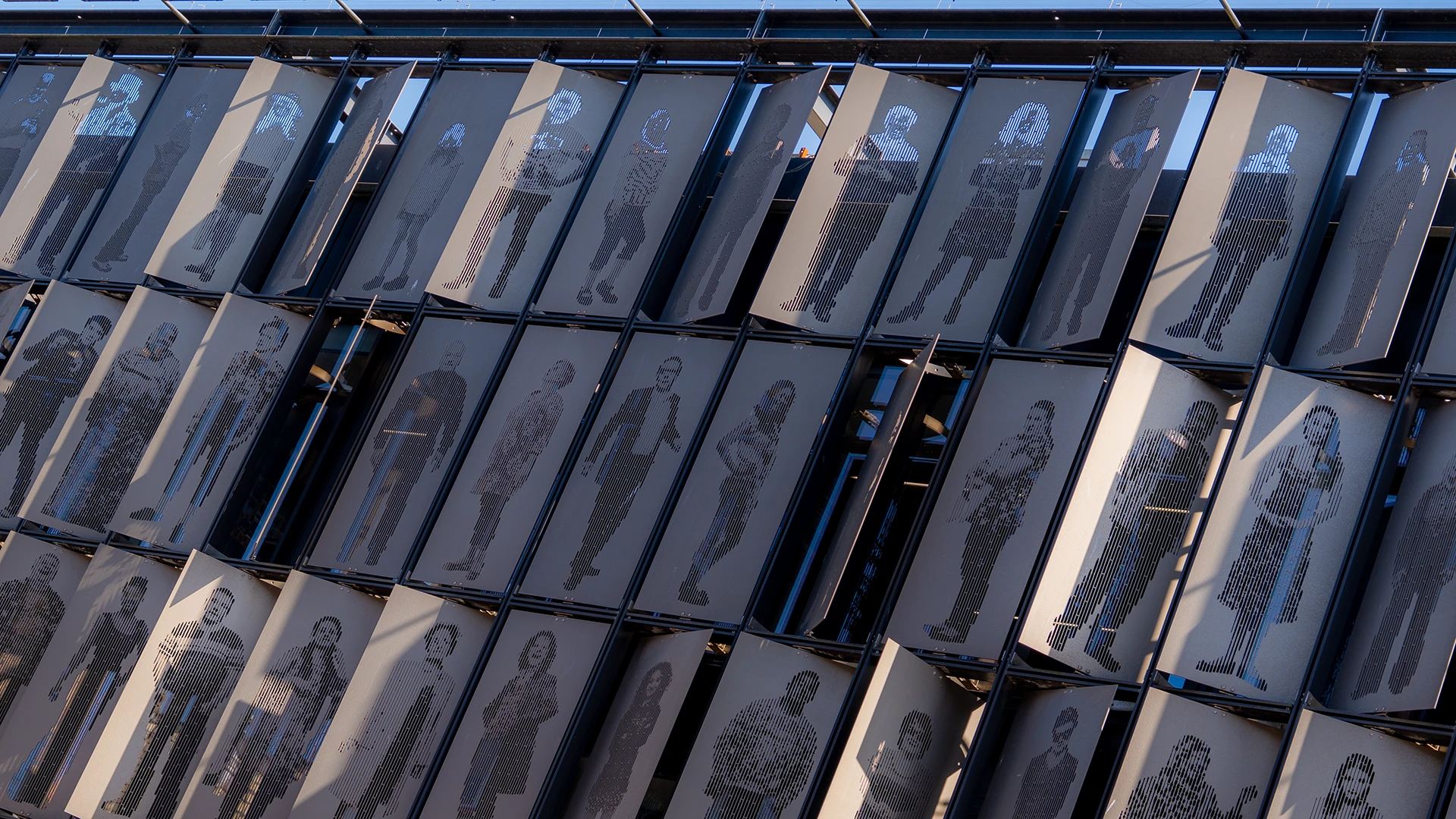
They are generally seen with either horizontal or vertical blade configurations, with the blades laid at varying pitches. This allows for the creation of a unique aesthetic which can add horizontal continuity across a large space, or the perception of additional height to a building.
Architectural louvres can also include hidden structural supports, mullions and other features which add even more complexity to the design finishing process.
Anodised aluminium the best choice for architectural louvres
When you need a mix of high technical quality, long-lasting performance and aesthetic brilliance, it is important to choose the right finish for your architectural louvres. Anodised aluminium from United Anodisers is the ideal choice to meet all the criteria:
- Consistency of colour across the entire structure, no matter how vast or complex the design, including the hidden structural elements.
- Minimal risk of colour fading or failing in any way in any weather conditions.
- High level of durability in all environments and conditions, resistance to all forms of damage.
- Bespoke finishes available to meet any design specification.
- Completely recyclable, making your architectural louvres a more sustainable choice.
- 25+ year lifetime guarantee available.
- A1 fire rated for additional building safety.
Get your essential building features right with anodised aluminium finishes
Architectural louvres are a technical building feature which has rapidly become an aesthetic design choice. They offer architects and specifiers the best of all worlds – and an anodised aluminium finish is the right choice for ensuring your architectural louvres perform technically and visually for decades to come.
Want to learn more and see our finishes for yourself? Contact our team and request your free anodised aluminium sample pack today.
Get a free sample or ask a question
As a world leader in aluminium surface treatment, we offer expert guidance on selecting the right metal and anodising process for panels and sheets.
More news & insights
Stay up-to-date with the latest company news and industry insights.