%2520(1).avif)
Thursday, January 15, 2026
Summary
In this article, we will cover the key advantages of anodising over other finishes so that owners, developers, architects, main contractors, façade manufacturers, fabricators, specifiers and planning authorities gain an in-depth understanding of the proven benefits of anodised aluminium and explain why this is increasingly the material of choice for buildings of the future.
What is Anodising?
Anodising is an electrochemical process that thickens and hardens the natural oxide layer on the surface of aluminium. It creates a durable, corrosion-resistant finish and is widely specified and used across façades and architectural aluminium systems. The benefits of anodising are also sought after in other applications such as automotive trim, industrial components, public art, outdoor structures, lighting, furniture and more.
No possibility of fading or chalking
Chalking is the formation of a fine powder on the surface of the paint film during weathering. It can cause significant deterioration in surface appearance, with a reduction in the gloss level, surface lustre and colour. Anodised aluminium does not suffer from this disfiguring condition, even when exposed to difficult exterior environmental conditions, such as marine locations or very sunny and/or humid climates.
Natural silver, Anolok® bronze, and Anolok® ll blue-grey anodised finishes contain no organic elements. Therefore, the anodic layer itself is highly UV stable and will not degrade under sunlight in service. No colour fading is possible during the service life of these finishes. Organic powder coatings are always subject to fading in varying degrees over the lifetime of a building.
Over 40 years of proven long-term on-site durability
The technology of anodising has been established for almost 100 years. Whilst the process has been continuously refined, especially in terms of quality, the chemical and technological fundamentals remain unchanged.
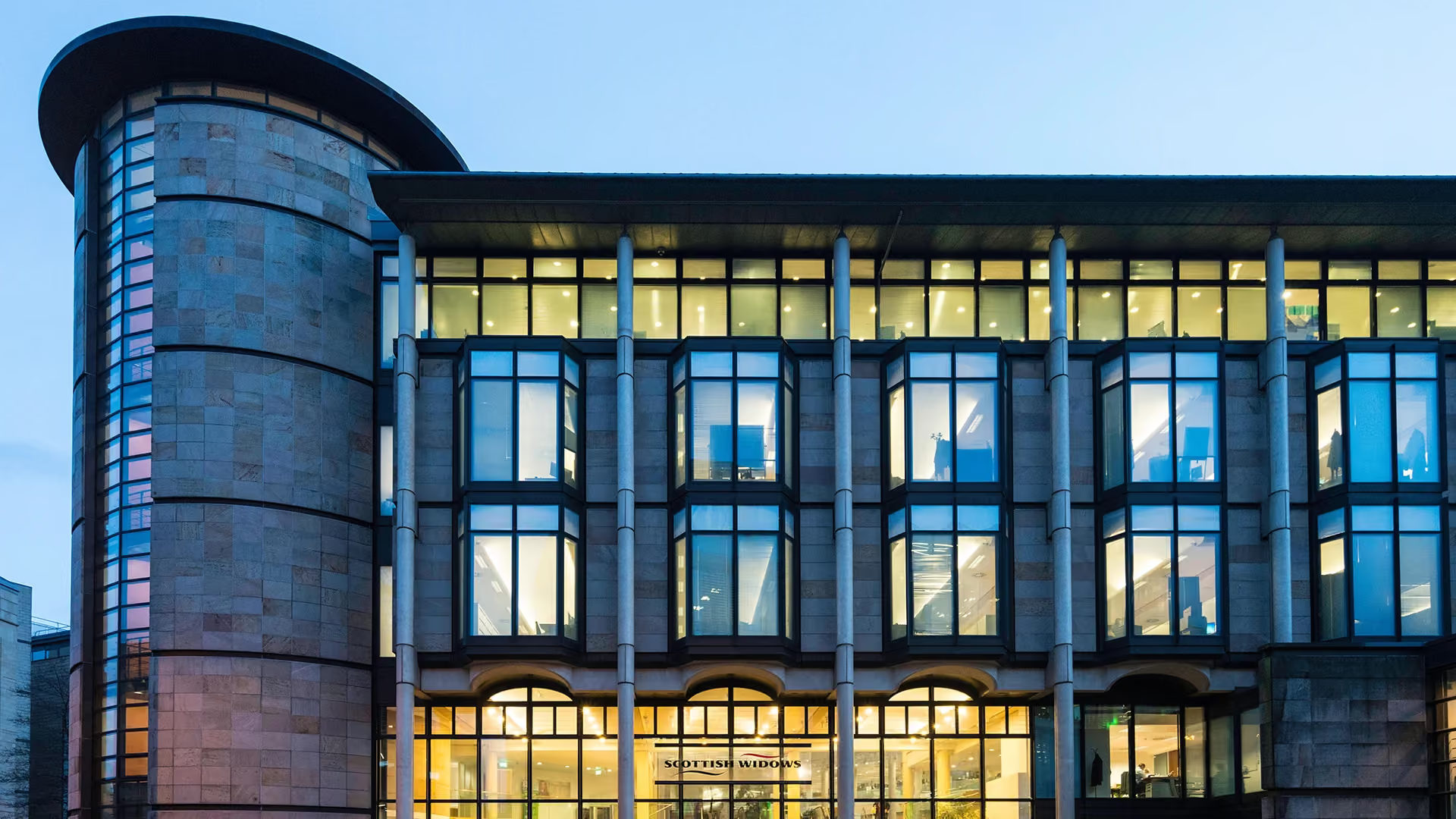
The on-site behaviour of the anodised surfaces produced today is fully predictable, based on the proven, long term, service experience. Independent inspection commissioned by United Anodisers has confirmed that the anodic protection remains undiminished after more than 40 years compared to the chemistry of organic coatings which is much more recent and, further, due to legal and environmental constraints, has been subject to continuing modifications.
Authentic metallic sheen, lustre and feel
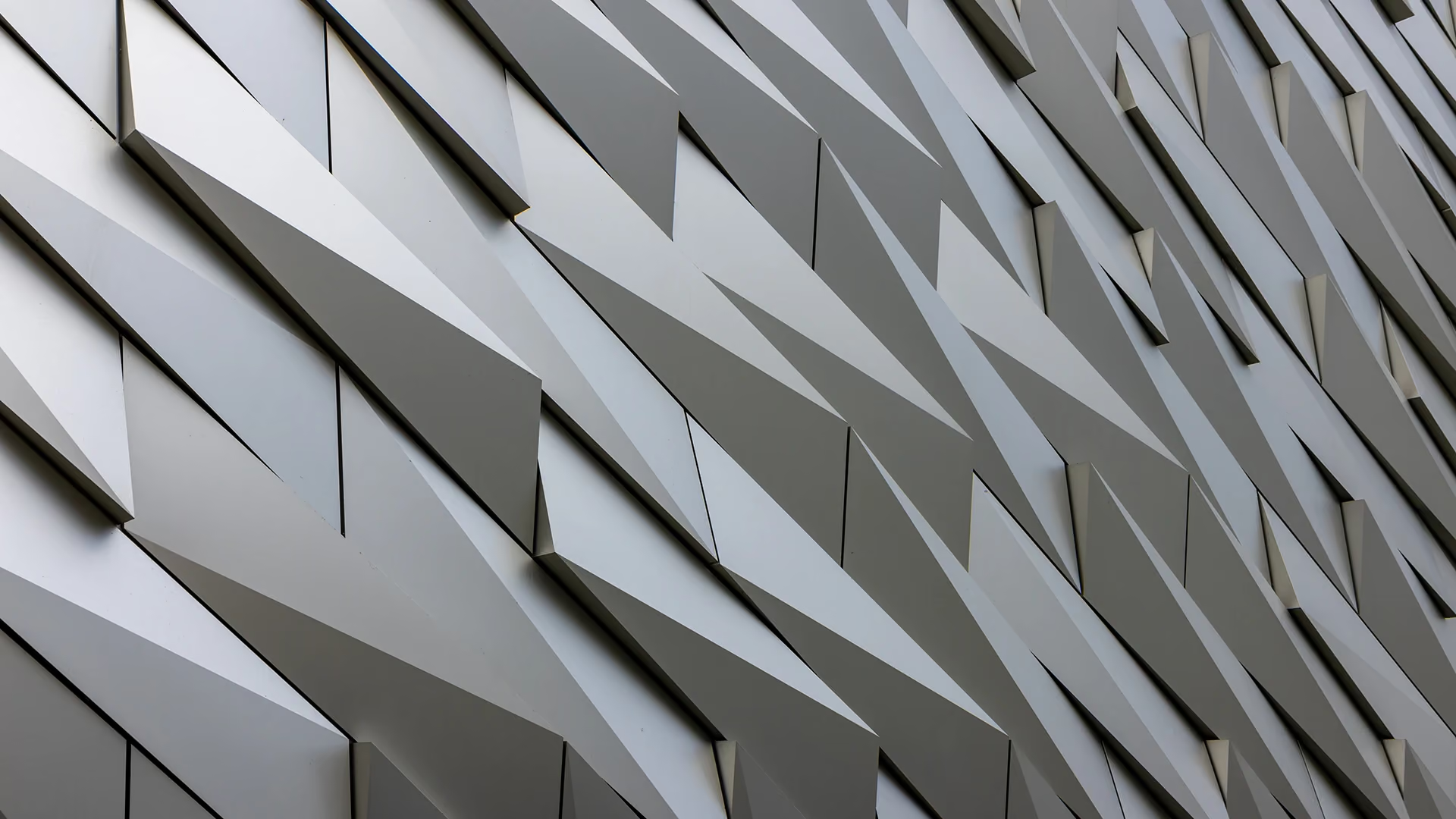
The anodic layer is transparent and integrated in the surface of the metal; the natural metallic appearance and feel of the aluminium are fully preserved. The anodised finish will enhance and reinforce the natural beauty of aluminium to create a living surface constantly interacting with the natural or artificial light playing across its surface.
Regardless of the substrate material - aluminium, steel, plastic - a painted surface always has the same, flat appearance. In trying to achieve the authentic metallic lustre of anodised aluminium, painted aluminium uses multi-layer systems with metallic pigments with the risk of creation of colour variations, including metameric failure.
Excellent Corrosion Resistance
Even in its natural state, aluminium does not corrode in the same, destructive, way as iron or steel. On the contrary, its natural oxide layer provides a self defence against corrosion.
Corrosion of aluminium, however, permanently damages the aspect of the metal.
Anodising creates a perfectly formed and scientifically controlled oxide layer, which ensures a surface of unparalleled corrosion resistance and locks in the pure and natural metallic aspect of the metal. It has been used for external building applications for over 60 years.
With an appropriate anodic layer thickness for external use, anodised aluminium will perform without problem, even in the most severe environments. In particular, anodised finishes are highly durable in city and marine environments, due to their resistance to chlorides and sulphates.
 2024
2024
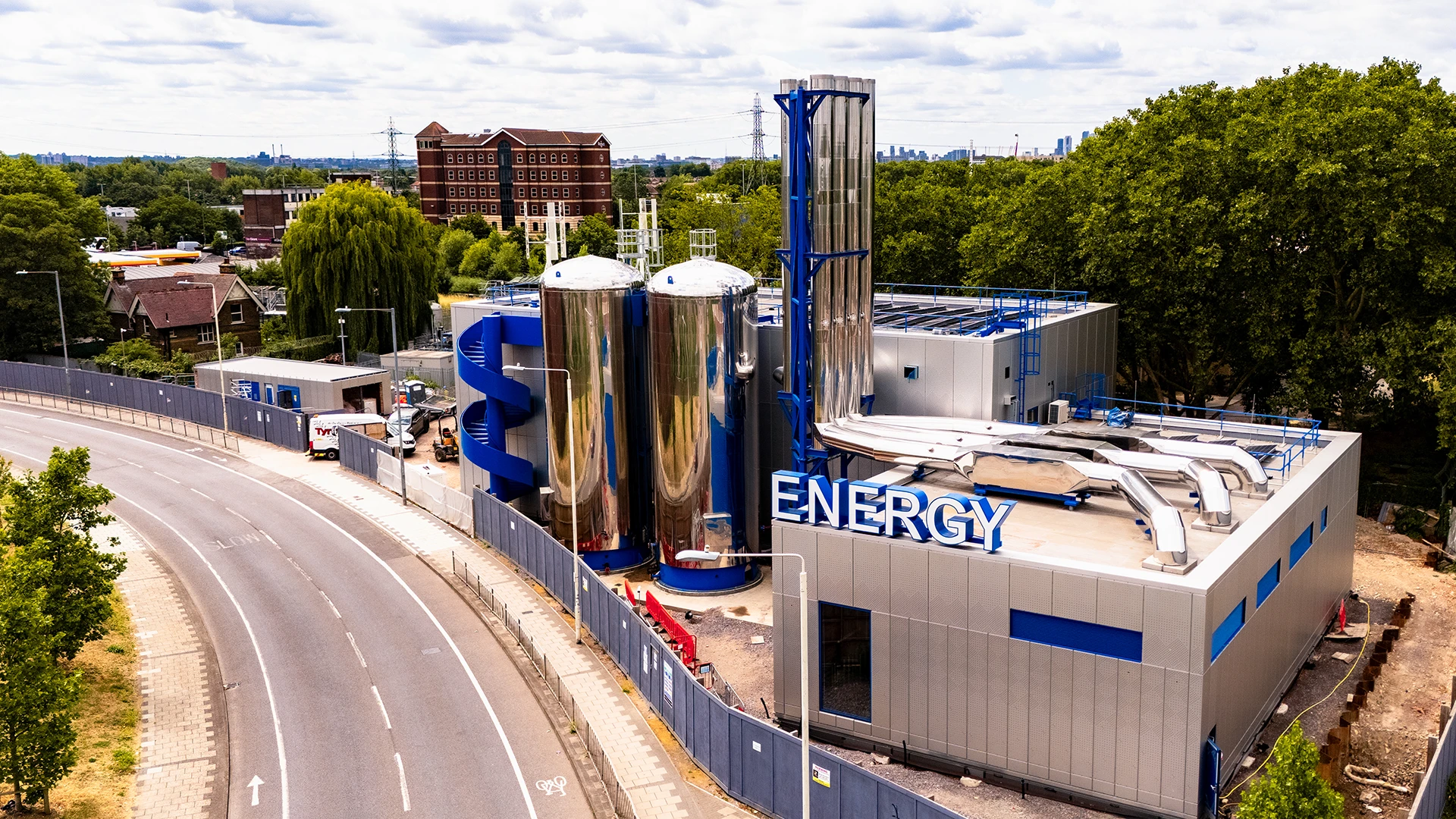
Barking Energy Centre
United Anodisers partnered with Central Fabrications Midlands Ltd to create a bespoke UnAtex 2131 anodised finish, engineered for long-term performance in a demanding C4 industrial environment.
Excellent Abrasion Resistance
Aluminium oxide is a very hard compound, which is second only to diamond, on the Mohs scale of mineral hardness. Anodised aluminium surfaces therefore offer superior scratch and abrasion resistance than coated surfaces. Two further showed this excellent abrasion resistance anodised surfaces are very hard at least 80% of the hardness of a diamond.
Low maintenance and whole‑life cost advantages
Anodised aluminium does not require much maintenance in service, which means that for most buildings rainwater is enough to keep the surface looking and performing as intended. Additionally, due to the fact that with this surface treatment, there are no paint films to degrade, chalk or delaminate, anodised façades typically avoid expensive repainting cycles, delivering lower whole‑life cost compared with organic coating systems over the design life of the building.
No risk of adhesion failure
Anodising is an electrolytic process, which transforms the surface of the metal into an oxide layer integral with the metal itself. It is not a coating applied to the surface of the metal.
There is, therefore, no risk of adhesion failure such as peeling, blistering, cracking, splitting or chipping which may occur with surface coatings, such as painting. There will be no adhesion failure, even on cut edges or joints.
No possibility of filiform corrosion
Filiform corrosion is an attack on the hidden inter-layer between the aluminium and the surface finish which results in the propagation of corrosion under the surface finish. With anodising, the oxide (anodic) layer is integral with the aluminium. There is no inter-layer between the metal and this protective oxide layer.
As a result, the finish will remain free from filiform corrosion. If the surface is punctured or damaged, the aluminium will simply repair itself through natural oxidation.
The absence of an inter-layer zone ensures that there can be no corrosion as found with painted products.
Uniform surface finish for all metal shapes and textures
Anodising is a process which can be carried out prior to or after the transformation of the metal. Since it is an immersion process rather than an applied finish, anodising provides a particularly uniform and regular finish on most metal shapes and textured surfaces such as perforated sheets, tread plates, linished or brushed metal, mesh material, stucco surfaces, etc. As a result, building exteriors blend different materials with anodised aluminium without any problems.
Anodising avoids the risk of localised high coating thickness or orange peel effect, typically associated with organic coatings on such surfaces.
 2021
2021
Wadham College
Our experience and processes allow us to provide anodised aluminium finishes which are completely uniform, even across elements which are non-standard or complex.
Optimal Coverage
Batch anodising, as an immersion process, achieves a more uniform surface coverage, especially for extruded sections. With spray paint processes and, especially with powder-coating, the non-visible surface is often not coated.
Highly impermeable anodic layer
A properly sealed anodic layer is impermeable. Furthermore, when severe environmental temperature fluctuations occur, the anodic layer is not subject to damaging physical changes and consequential embrittlement. With an organic coating, these changes may occur when the coating is subjected to temperature cycles above and below its glass transition temperature.
Environmental benefits of pure anodised aluminium - 100% recyclable
One of the key advantages of aluminium over other materials is that it can be recycled repeatedly through simple re-melting with minimal loss on each cycle. In Europe, more than 30% of aluminium consumption is satisfied with recycled aluminium and over 90% of the aluminium used in buildings is recycled at the end of the building's life.
The recycling process requires only 5% of the energy required to produce primary aluminium - a significant contribution to environmental sustainability.
Anodised aluminium is unique, comprising only pure aluminium, its alloying elements and oxygen. As pure aluminium, it is fully recyclable without intervening chemical processes and emissions. Because of this and the ready market for quality aluminium scrap, the anodised aluminium will have a cash value to offset the cost of demolition at the end of the useful life of the building.
Fully recyclable, anodised aluminium answers all the environmental imperatives of today and tomorrow.
Environmentally friendly production process in accordance with latest environmental standards
Modern architectural anodising plants are capable of responding to the most stringent environmental standards with full chemical recycling and a large recovery of waste water. Anodising does not require environmentally sensitive pre-treatment like chromating. The anodising process does not produce CO2 or solvent emissions.
Fire performance and non‑combustibility
In addition to their mechanical and corrosion performance, anodised aluminium façade components can form part of Euroclass A1 non‑combustible systems under EN 13501‑1 when combined with suitable substructures and insulation, contributing negligible fire load to the external wall.
Specification, compliance and the Golden Thread
Under the Building Safety Act 2022, architects and principal designers must be able to evidence why façade materials were chosen and how they support the project fire strategy at Gateways 2 and 3.
Anodising is A1 fire rated with well-documented reaction to fire and durability data; it fits naturally into the golden thread documentation, supporting duty holders to demonstrate safety performance and long-term resilience of the external envelope.
Long-term Guarantees
Guarantees are often considered by specifiers or building owners to provide reassurance about the long-term performance of a surface finish.
In recent years, there has been a trend of extending guarantees for longer and longer periods as a way of outbidding competing surface finishes.
But, guarantees have often been full of exclusions and reservations. Invoking guarantees, often years after the event, frequently involves costly litigation. Further, even if the guarantee is successfully invoked, replacement of defective parts may be impossible without partial demolition of the building.
Where this is not practical, the owner of the building will be simply left with the problem over the long term; legal recourse for aesthetic damage is notoriously difficult to assess. Surface failure may render a building impossible to sell or otherwise seriously blight its open market value.
Historically, quality claims against leading architectural anodisers have been negligible. In the highly unlikely event of a claim, the anodiser alone bears full responsibility for all properties of the anodic layer.
As a result of our independent surveys on the long term on-site performance of our anodising - including in polluted and marine environments – we offer a simple, straightforward, unequivocal design life guarantee, typically for at least 25 years. Please contact us at the start of the project to discuss your project specifications and any warranty required.
Guarantees for organic coatings are not backed by the same site exposure history. For any organic coating, the responsibility for any failure is necessarily divided between the paint manufacturer and the paint applicator. The guarantees available from the manufacturers of polyester powder specifically exclude adhesion.
Guarantees are important, but only if they are simple, straightforward and long term - this is only possible when they can be given backed with the full confidence of proven, long-term, on-site performance as shown by our proven durability dating back to the start of our architectural anodising in 1961
Conclusion
If you want long-term reliability, a lifetime guarantee and A1 fire rated materials for your building exterior to ensure it maintains its appearance for decades to come, anodising is a proven choice. It offers strong environmental performance, inherent safety, and consistent durability, helping projects meet specifications, satisfy planning requirements, and stay on schedule.
To see the results in practice, explore our extensive project gallery that showcases successfully projects for more than 50 years and our review our detailed case studies of projects completed around the world. You can also request a sample to see the finish up close for yourself.
Get a free sample or ask a question
As a world leader in aluminium surface treatment, we offer expert guidance on selecting the right metal and anodising process for panels and sheets.
More news & insights
Stay up-to-date with the latest company news and industry insights.