
Monday, September 7, 2026
Stainless steel is a tried and tested building material in widespread use. Whether you are looking for exterior or interior elements, it is a known quantity which will naturally appeal to architects and designers.
However, anodised aluminium has advantages over stainless steel which make it a better option in many cases. Learn more about anodised aluminium vs stainless steel in this guide.
Anodised aluminium is lighter than stainless steel
Aluminium is approximately one third of the weight of stainless steel, making it ideal for buildings and other applications where lightness adds real value. For example, if your building façade weighs less, it allows a lighter substructure in turn, putting less strain on the building structure, increasing the overall resilience and longevity of the building and potentially allowing lower cost structural solutions to be considered.
Aluminium is lighter than stainless steel and more cost-effective due to lower façade loading, allowing the use of a lighter substructure, allied to the lower weight and therefore lower cost per sqm of the cladding itself.
Anodised aluminium can be more cost effective than stainless steel
A lower weight profile also provides another key advantage. Metal is sold by weight, so the less of it you use the more cost-effective your project becomes in most cases. Stainless steel is more expensive pound-for-pound, and that excess cost multiplies when you specify it across larger areas such as a building façade.
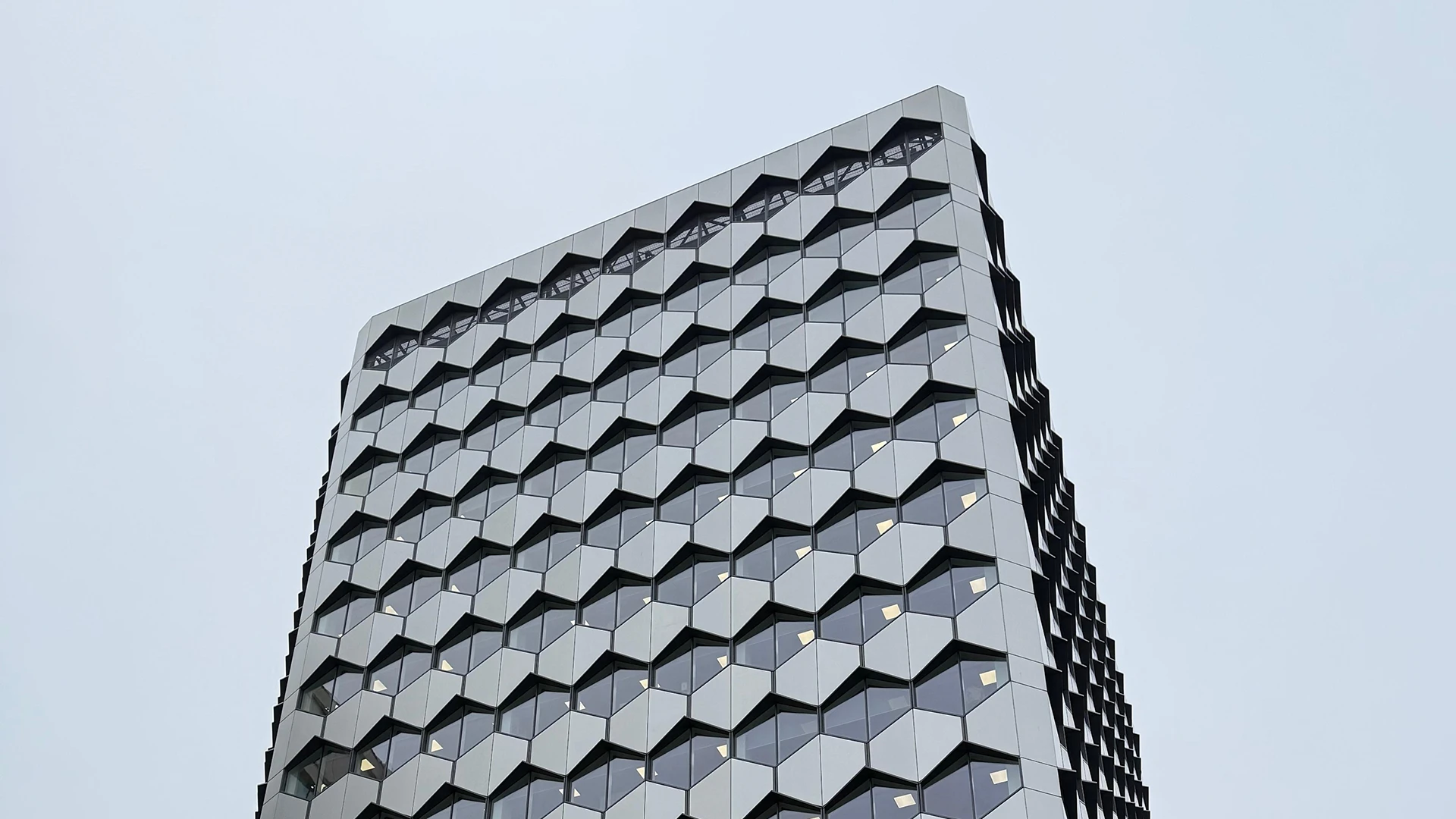
That makes anodised aluminium a budget-friendly choice for many projects – without sacrificing one of the most important advantages of stainless steel: strength. A recent project, 3 Arena Central, showed this dynamic in action.
The architect, Richard Meddings, said: “Anodised aluminium gave the finish we required for the façade. It was more cost-effective and lighter than stainless steel and had more depth and life than a powder-coated alternative.”
Read about that project here. [LINK to 3 Arena Central/HMRC]
No durability trade-offs when you choose anodised aluminium over stainless steel
One of the most important advantages of stainless steel is its durability. It is so durable in the face of corrosion and damage that it changed the world when first developed. However, anodised aluminium has proven itself a credible alternative to stainless steel in this area, and you can specify it with confidence.
The on-site behaviour of anodised aluminium is fully predictable, based on our proven, long-term experience anodising for architects since 1971. That longevity is due to a high level of durability. Anodised aluminium is resistant to:
- Corrosion or damage from wind, rain, UV, pollution or other sources
- Filiform corrosion
- Abrasion
- Adhesive failure
It is also impermeable, so it can resist damage from physical or environmental changes.
Learn more about the durability of anodised aluminium here, or contact us if you want to know more about the benefits of anodised aluminium compared to stainless steel.
Get a free sample or ask a question
As a world leader in aluminium surface treatment, we offer expert guidance on selecting the right metal and anodising process for panels and sheets.
More news & insights
Stay up-to-date with the latest company news and industry insights.