
Monday, November 2, 2026

The construction industry’s environmental impact is an ongoing problem. The sector is by far the largest emitter of greenhouse gases in the world according to the UN Environment Programme, accounting for 37% of all global carbon emissions.
Reducing the emissions generated by buildings in operation has traditionally been the focus for people trying to make the sector more sustainable. However, an increasing amount of attention is now being given to the materials we use and their embodied carbon emissions.
What is circular design?
Specifying materials which can be reused, repurposed or recycled in the future – otherwise known as circular design – is a key way architects and developers can improve the sustainability of their projects and reduce their environmental impact.
Choosing materials which are…
- Durable and resilient in all environmental conditions
- Easily recyclable at the end of their life
- Fire resistant to protect the building as a whole
- High performance to ensure they don’t need replacing early
- Versatile so architects don’t have to compromise on their vision
- Simple to clean and maintain to avoid additional rework in future
…helps minimise waste and embodied emissions in your project.
What materials suit circular design?
Architects should avoid materials which are not recyclable, have short lifespans and will eventually end up in landfill such as:
- Plastics
- Additive-based products
- Plastic/metal composites
Instead, architects should prioritise materials which are durable and fully recyclable at the end of their life such as:
- Aluminium
- Glass
- Timber
Importantly, you should also consider the finishes used on these products. A recyclable product coated in a single-use finish is not a good fit for circular design – for example, an aluminium cladding system with a plastic-based finish.
How does anodised aluminium for façades and rainscreen cladding support architects specifying a circular design?
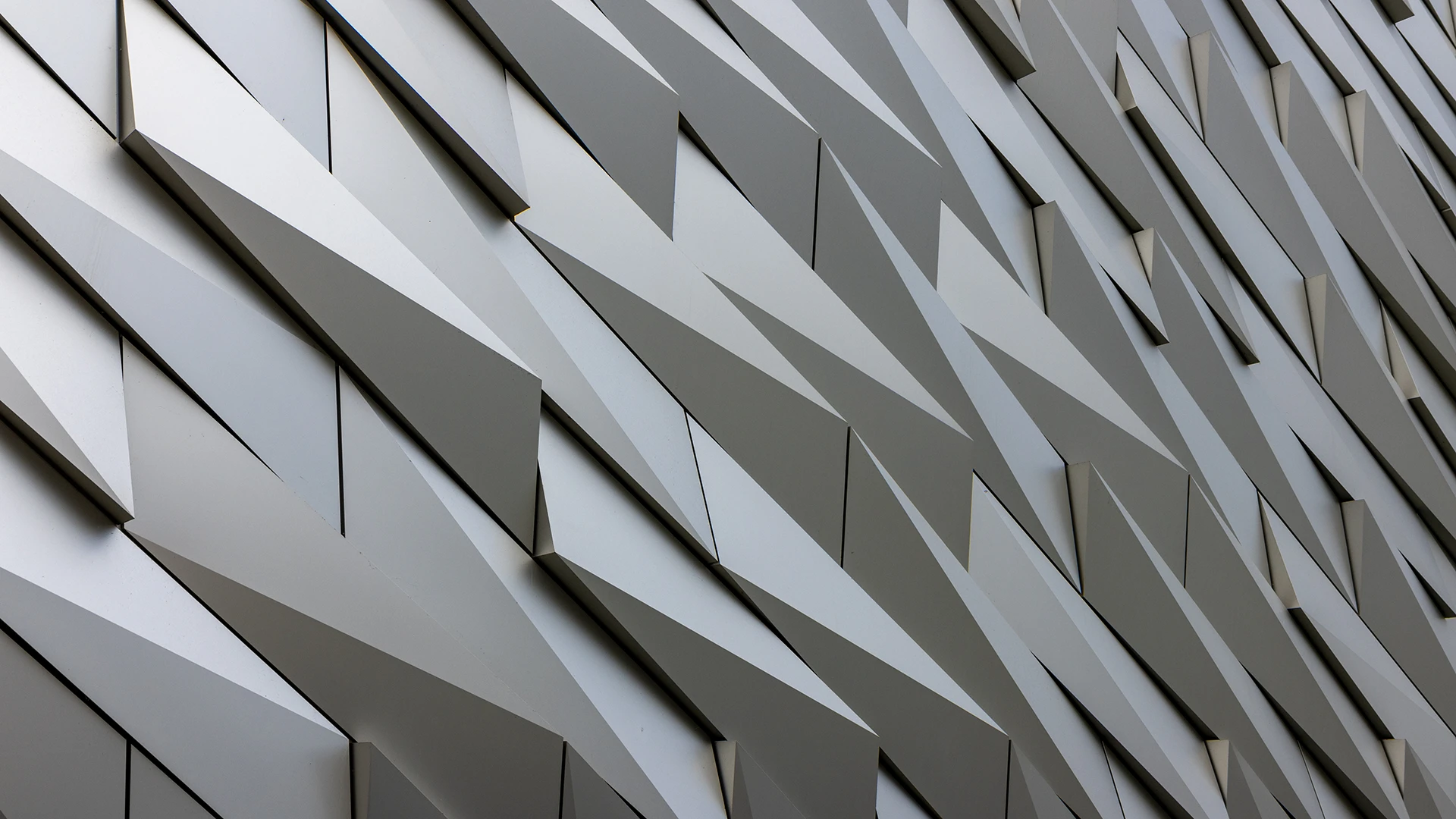
Anodised aluminium finishes for façades, rainscreen cladding and other applications are the perfect choice for architects following circular design principles for their next building project.
The finish is integral to the metal and can be recycled again and again via the normal aluminium recycling process.
It also provides the following benefits:
- Durability – Anodised aluminium is resistant to abrasion and corrosion of all types, in all conditions and environments.
- Fire safety – All our anodised aluminium finishes are A1 fire rated, the highest level of fire resistance.
- Colour uniformity – Our colours are uniform and consistent for the lifespan of the product, reducing any need for rework or replacement.
- Low maintenance – Only minimal maintenance and cleaning is required over the lifetime of our finishes, even in high pollution areas or marine environments.
- Long life – All our finishes are available with a 25+ year lifetime guarantee without caveats or loopholes.
Our anodised aluminium finishes are so robust that many of them have outlasted the buildings they were originally installed on! See more by viewing our case studies.
Anodised aluminium for architects: Circular design and sustainability made easy
Those qualities make anodised aluminium perfect for architects and specifiers designing for circularity in the built environment. We offer a wide range of colours, textures and patterns – and can even create a bespoke finish that is unique to your development.
Want to see for yourself? Contact our team today and request your free sample of our exceptional anodised façade finishes for circular building design.
Get a free sample or ask a question
As a world leader in aluminium surface treatment, we offer expert guidance on selecting the right metal and anodising process for panels and sheets.
More news & insights
Stay up-to-date with the latest company news and industry insights.